

 Meta
 Messenger
 Instagram
 Email
 WhatsApp
 Website
 OpenAI / AI
 Call Management
 File Manager
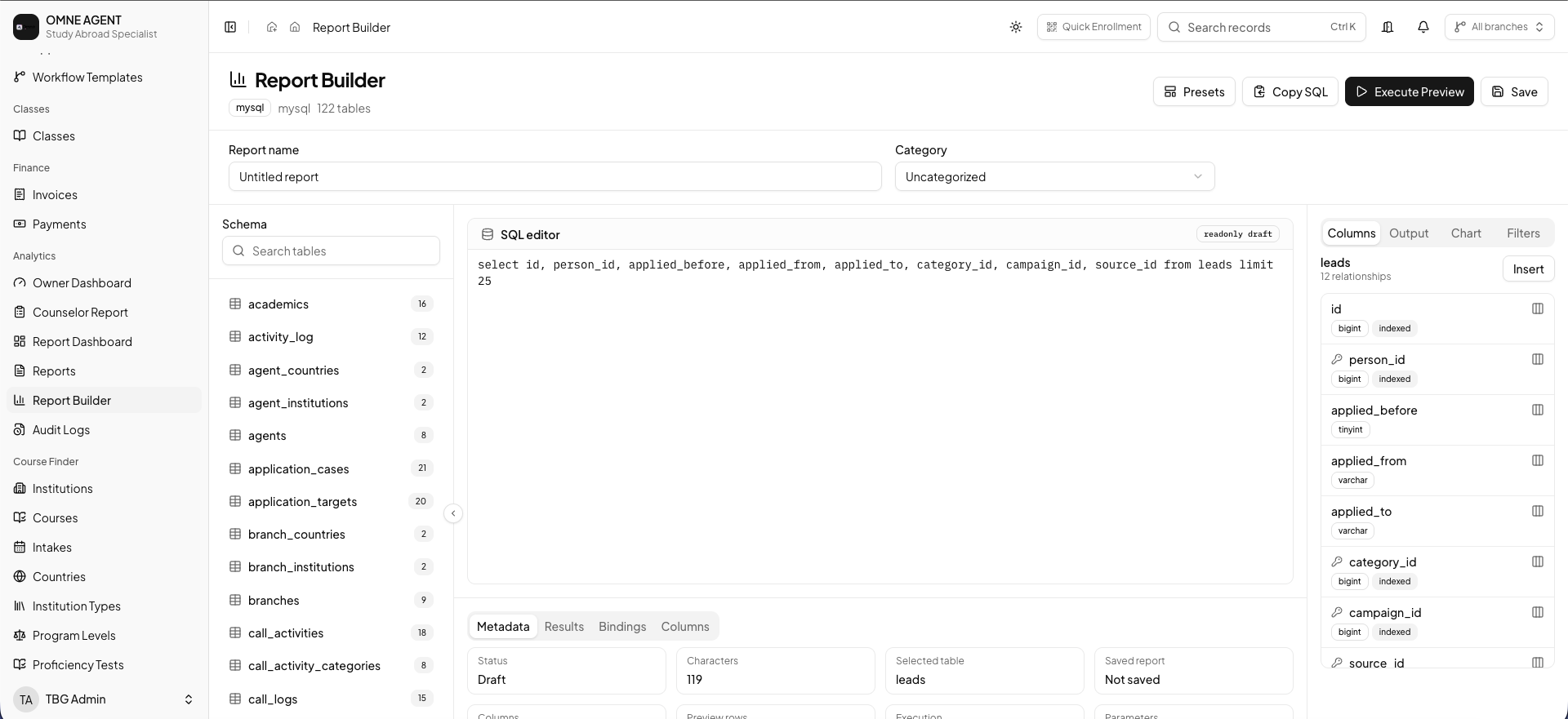
A report becomes useful when it helps a team decide what to investigate or do next. Begin with a specific operational question, then review the records and context behind the figures.
Start with one question
Choose a question such as which follow-ups need attention or where applications are waiting. Select a reporting period and define the stages or statuses involved. Without consistent definitions, teams can spend the review discussing what a number means instead of the work behind it.
Compare like with like
Check whether the groups being compared cover the same period and use the same definitions. Branches or counselors may handle different workloads and types of inquiry. Review that context before treating a difference as a performance conclusion.
Record a concrete next step
Use the report to select a manageable action: clarify ownership, review a delayed handover or check missing information. Assign an owner and a review date. In the next review, look at what changed and whether the action addressed the problem you identified.
A practical checklist
- Choose a specific operational question.
- Define the reporting period and relevant statuses.
- Review the context behind comparisons.
- Assign an action and a date to review its outcome.