

 Meta
 Messenger
 Instagram
 Email
 WhatsApp
 Website
 OpenAI / AI
 Call Management
 File Manager

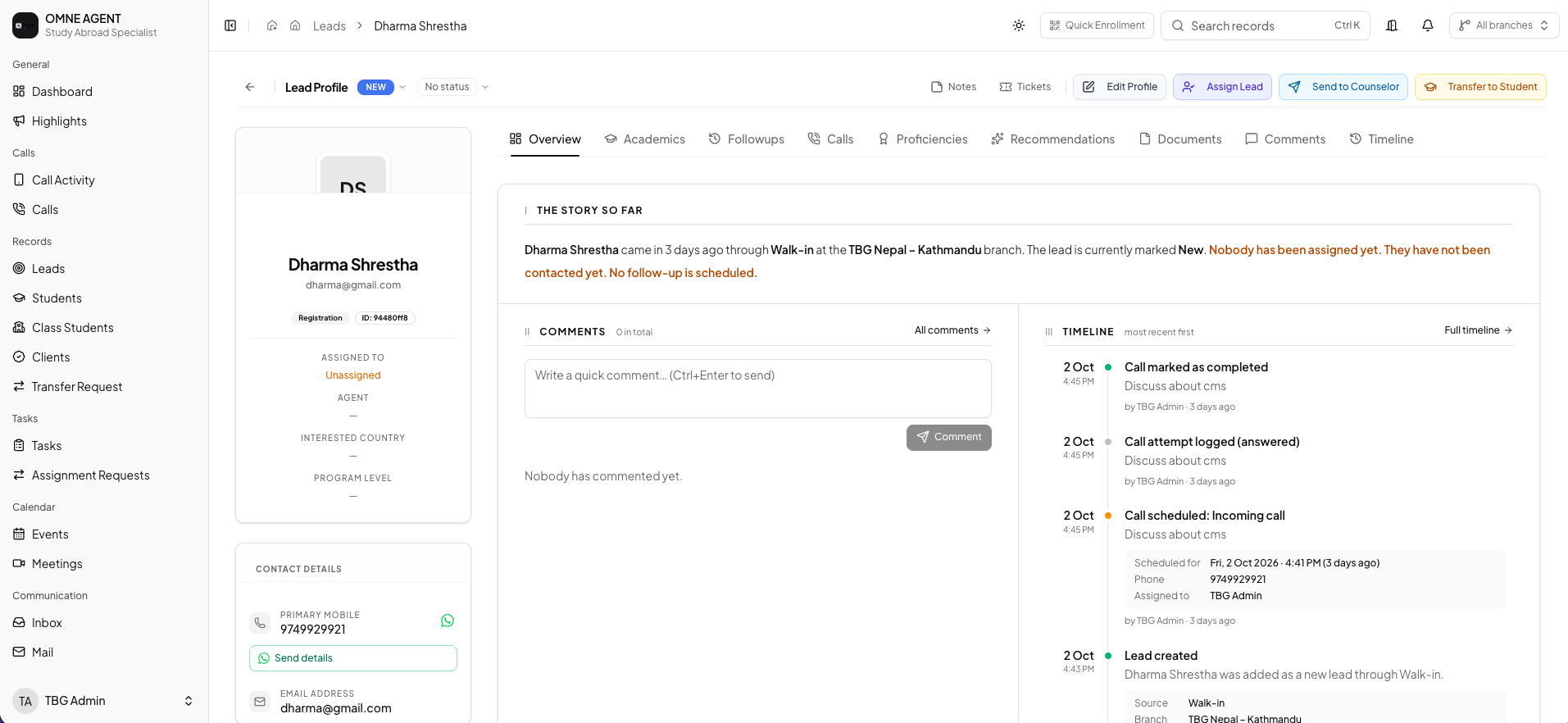
A useful follow-up process tells a counselor three things: who needs attention, what has already happened and what to do next. Start there before adding more stages or reminders.
Give each inquiry one owner
When an inquiry arrives, record its source and assign a responsible counselor. Shared visibility helps the team coordinate, but it should still be clear who is expected to make the next contact. If ownership changes, include a short handover note rather than expecting the next counselor to reconstruct the conversation.
Make the next action specific
Replace notes such as “follow up later” with a concrete action and an agreed date. A useful note might say: confirm the preferred intake after the student reviews the course options. This gives the next conversation a purpose and helps colleagues understand why the lead is waiting.
Review overdue work in context
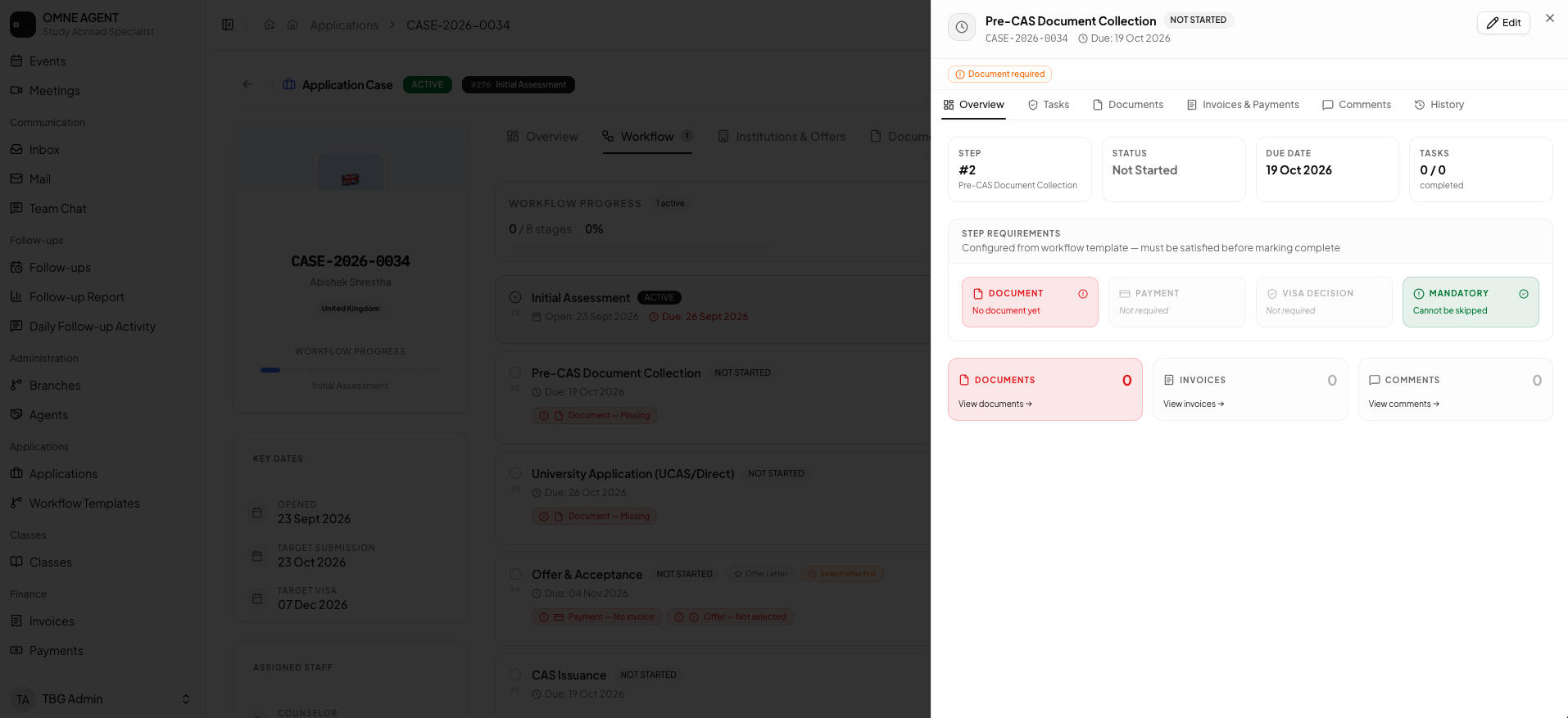
Use a short team review to look at pending actions and their context. A delayed reply, missing information and an unassigned inquiry need different responses. Agree on the next action for each case, then review whether the process is helping staff keep useful conversations moving.
A practical checklist
- Record the inquiry source and responsible counselor.
- Keep a short summary of the latest conversation.
- Give the next action a date and a clear purpose.
- Include context whenever ownership changes.